
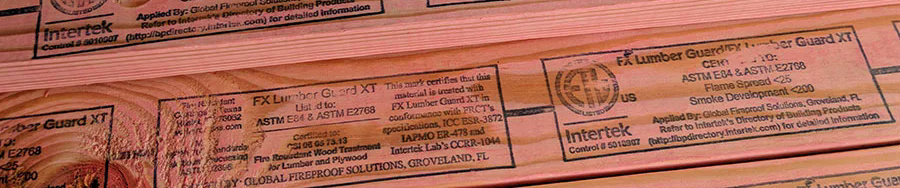
If you’re thinking about putting in fire-rated wood panels—maybe for peace of mind, or just because local codes say you have to—it helps to understand FRT pressure wood, or FRT, and why people use it. You can get FRT for both plywood and standard lumber, which covers most of the wood you’ll find in a building’s structure. Let’s break down the different types of FRT wood, how manufacturers make them, and where you’d actually use them.
The Development Of FRT Wood
Manufacturers usually soak it with organic and inorganic salts. They do this by forcing water-based solutions into the wood under pressure. When they’re done, you end up with about 2.5 to 5 pounds of salts packed into each cubic foot. But here’s the catch—not every wood species takes to this treatment. Even if a lumber species gets certified, that doesn’t always mean you can treat its plywood version the same way, and the reverse is true too.
The Structure Of FRT Wood Products
FR chemicals protect wood in a couple of main ways. First, they slow down how quickly flames spread, so the wood doesn’t catch and burn as fast. They also cut down on how much heat the wood gives off if it does catch fire. On top of that, these chemicals change the vapors that come off the wood when it burns, making them less likely to ignite.
Lab Testing and Stamping
Testing and stamping of (FRT) wood are critical to ensuring product quality, performance consistency, and code compliance. The key elements of the testing and labeling process include the following:
Flame Spread Rating
| Flame Spread | Class Rating |
|---|---|
| 0 | Noncombustible |
| 0 – 25 | Class A |
| 26 – 75 | Class B |
| 76 – 200 | Class C |
Smoke Developed Index
The smoke developed index is measured during the same fire test used to determine the flame spread index. As with flame spread, the amount of smoke produced by burning red oak flooring serves as the baseline and is assigned a value of zero.
FRT Plywood Formulations
You’ll usually find two main types of chemical treatments for FRT plywood: Type A and Type B. Type A work’s best indoors, as long as the humidity stays at 95% or lower and there’s no real risk of water exposure. Type B is for even drier spots—think places where the humidity doesn’t go above 75%. There’s also FRT plywood made for outdoor use. This stuff can handle humidity over 95% and situations where rain or water might leach the FRT out of the wood.
Building Codes
The International Building Code (IBC) defines FRT wood as wood that achieves a flame spread index of 25 or less and demonstrates no significant progressive combustion when the test is extended to 20 minutes. To comply with IBC requirements, FRT wood products must be properly labeled. Each label is required to include the following information:
The exact layout isn’t critical—what matters is that all-required information is clear and easy for code officials and maintenance staff to read.
- Product name
- Product species
- Where the wood substrate was treated and to what rating
- Drying method applied
- Name of the inspecting agency
- Flame spread rating
- Smoke developed rating
When you use fire-treated wood, you have to adjust its strength values, since the treatment changes how the wood behaves. Most building codes also call for specific fasteners with this material. If you build concealed spaces entirely out of FRT wood, you don’t need to add sprinkler protection—NFPA Standard 703. The International Building Code (IBC) actually lets you use fire-treated wood in places where you’d normally have to use noncombustible materials.
Conclusion
Treating wood with a chemical is a critical process in enhancing its resistance to ignition and slowing the spread of flames, thereby improving safety in various applications. FR sprays are commonly employed for post construction, as they penetrate the wood fibers and create a protective barrier that inhibits combustion. These sprays typically contain chemical compounds that react with the wood when exposed to high temperatures, forming a char layer that acts as insulation. It is essential to follow manufacturer guidelines for application to ensure optimal effectiveness, including surface preparation and drying times. Regular inspections and reapplication may be necessary to maintain the fire-resistant properties over time, particularly in environments subject to moisture or wear.